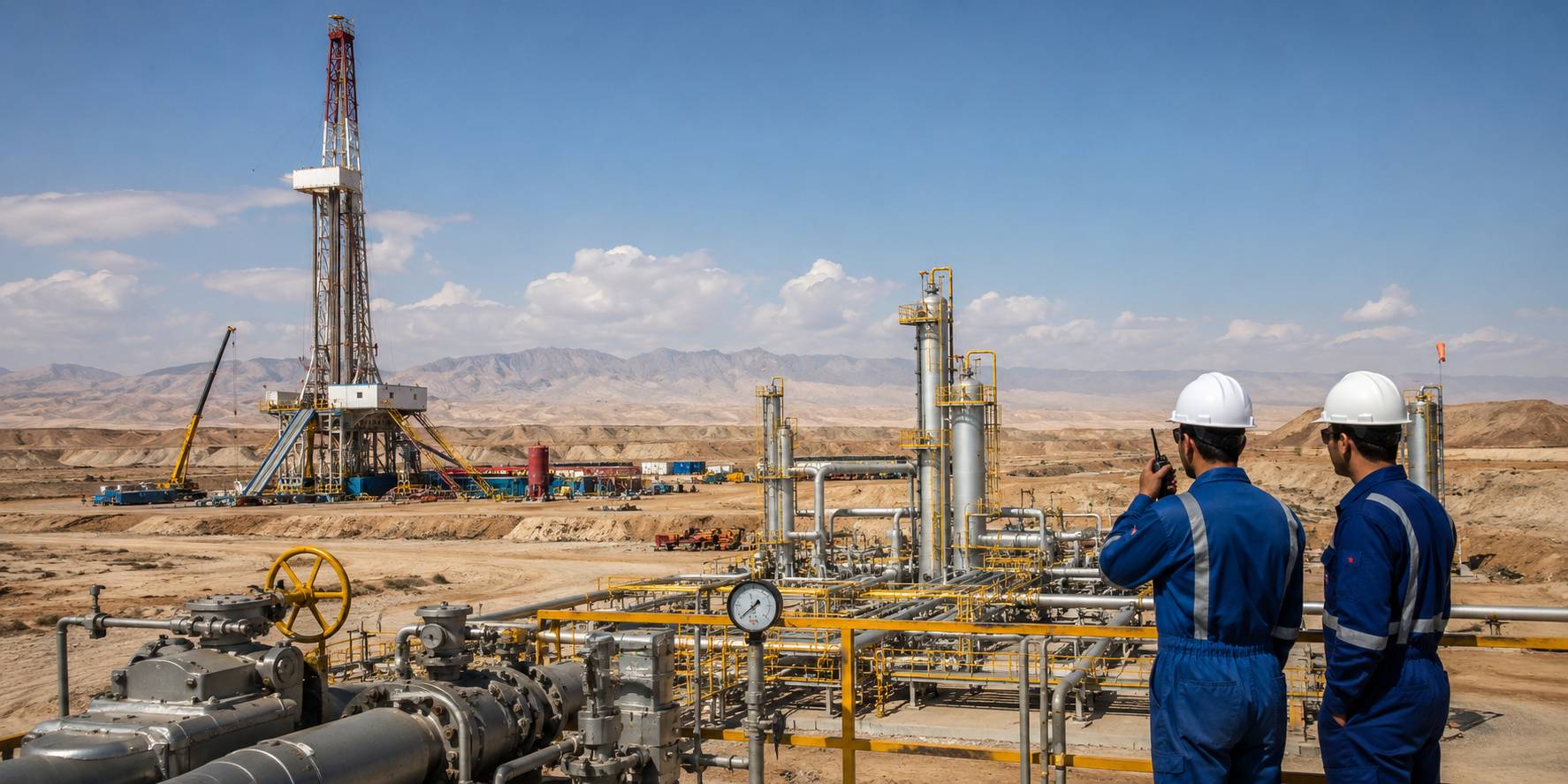
At Hirbod E&P, risk management is an integral component of decision-making, investment management, and upstream asset development.
The company’s approach is based on the continuous identification, assessment, quantification, and management of risks throughout the entire project lifecycle — from field evaluation and reservoir studies to development, production, and operations.
Risk management is not viewed merely as a control mechanism; it is embedded within the company’s culture and regarded as a fundamental driver of sustainable value creation.
Hirbod E&P applies modern integrated risk management principles aligned with international energy industry practices, utilizing structured and data-driven methodologies consistent with the company’s defined risk appetite.
Core Principles of Risk Management
- Data-driven decision-making
- Transparent risk assessment and reporting
- Protection of capital and asset sustainability
- Acceptance of calculated and controlled risks
- Disciplined capital allocation and project management
- Integration of risk management into corporate strategy and planning
Risk Management Framework
1. Subsurface & Technical Risks
Upstream oil and gas projects inherently involve geological, reservoir, and operational uncertainties.
Key technical risks include:
- Reserve estimation
- Reservoir performance
- Well productivity
- Drilling complexity
- Production forecasting
Risk mitigation measures include:
- Comprehensive reservoir studies
- Dynamic reservoir simulation
- Geomodeling and uncertainty analysis
- Multi-scenario production evaluation
- Independent technical reviews
- Specialized reservoir management and integrated well services teams
2. Financial & Investment Risks
The E&P sector is exposed to:
- Energy price volatility
- Exchange rate fluctuations
- CAPEX and OPEX escalation
- Complex financing requirements
Risk mitigation measures include:
- Multi-scenario financial modeling
- Sensitivity analysis
- CAPEX and OPEX optimization
- Flexible financing structures
- Liquidity management
- Risk-adjusted project prioritization
3. Contractual & Legal Risks
Field development projects involve complex contractual structures, regulatory obligations, and multi-party commitments.
Risk mitigation measures include:
- Balanced and transparent contractual structures
- Legal and contractual control systems
- Professional negotiation management
- Continuous regulatory monitoring
- Application of appropriate contractual models including IPC, EPCF, BOT, and BOO
4. Operational & Execution Risks
Upstream operations require complex coordination among contractors, suppliers, drilling operations, development teams, and operating entities.
Risk mitigation measures include:
- Integrated project management systems
- Supply chain risk management
- Supplier evaluation frameworks
- Phased project planning
- Progress monitoring and execution control
5. HSE & Environmental Risks
Protection of personnel, environmental stewardship, and process safety management are fundamental elements of Hirbod E&P’s operational strategy.
Risk mitigation measures include:
- QHSE systems aligned with international standards
- Proactive safety culture development
- Continuous process safety monitoring
- Environmental impact management
- Enforcement of HSE requirements throughout all project stages
6. Macro & External Risks
The energy industry is influenced by macroeconomic, geopolitical, regulatory, and global market developments.
Hirbod E&P continuously evaluates various market and geopolitical scenarios and their potential impact on projects and investments.
Risk mitigation measures include:
- Energy market scenario analysis
- Monitoring geopolitical and regulatory risks
- Diversification of investment and partnership models
- Enhancement of operational and financial resilience
- Development of indigenous capabilities and reduction of operational dependency